Why Do I Need to Make My Parking Lot ADA Compliant?
Most property managers think about drainage, surface wear, and long-term pavement planning long before accessibility comes up. But the ADA requirements for parking lots apply anytime your layout changes or asphalt work is done. If your lot slips out of compliance, it can quickly turn into complaints, penalties, or unnecessary disruptions.
So what does that mean in practical terms? The Americans with Disabilities Act establishes national standards for accessible parking, which apply to most commercial properties that provide parking.
Because Wisconsin follows the federal ADA parking requirements, commercial properties across the state must maintain layouts that comply with current standards. That becomes especially important during resurfacing or restriping, when measurements and striping are already being adjusted as part of broader maintenance efforts like parking lot repair.
So what exactly does compliance look like in practice? Let’s break down the specific requirements for commercial parking lots in Wisconsin.
Talk to Us About ADA Compliance Today

What Are The ADA Requirements for Wisconsin Parking Lots?
The Americans with Disabilities Act sets nationwide standards for accessible parking. These standards apply to most businesses and commercial properties that provide parking to employees or the public.
At a high level, ADA requirements focus on:
- The number of accessible parking spaces
- The size and layout of those spaces
- Proper signage
- Acceptable slope and surface conditions
- Clear accessible routes from the parking space to the building entrance
Accessible stalls must be placed along the shortest accessible route to the building entrance, with no barriers or unnecessary slopes between the parking space and the doorway.
These spaces are wider for a reason. The added width and clearly marked access aisles allow drivers and passengers using wheelchairs or mobility devices to safely enter and exit their vehicles. The access aisle must connect directly to a smooth, step-free pedestrian path.
Wisconsin enforces these federal standards. While inspection processes may vary by municipality, the design requirements do not. Accurate measurements matter every time asphalt is installed, a lot is restriped, or a parking layout is adjusted.
Priority ADA Parking Requirements You Need to Know
Number Of Required Accessible Spaces
The number of accessible spaces your lot needs depends entirely on the total parking count. This is one of the first things inspectors look at, and it is also one of the easiest things to get wrong after expansions or restriping.
Here is the federal calculation table:
| Total Parking Spaces in Lot | Minimum Required Accessible Spaces |
| 1-25 | 1 |
| 26-50 | 2 |
| 51-75 | 3 |
| 76-100 | 4 |
| 101-150 | 5 |
| 151-200 | 6 |
| 201-300 | 7 |
| 301-400 | 8 |
| 401-500 | 9 |
| 501-1,000 | 2% of total spaces |
| 1,001 and over | 20 plus 1 for each 100 over 1,000 |
An important side note: In addition to the total required count, at least one out of every six accessible spaces must be van-accessible.
For many Wisconsin commercial properties with between 50 and 1,000 spaces, that typically means calculating about 2 percent of the total inventory once you exceed 500 spaces. If your lot has been reconfigured, expanded, or recently restriped, it is worth double-checking those numbers to ensure they still align with current standards.
Accessible Parking Space Dimensions
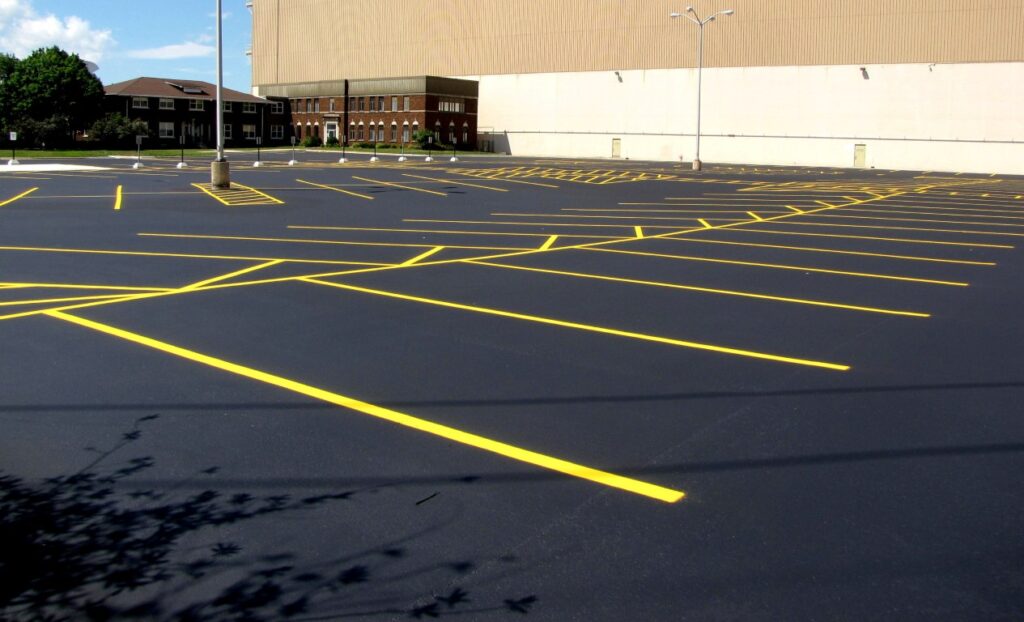
If there is one place where parking lots commonly fall out of compliance, it is with dimensions. A few inches may not seem like much, but in ADA terms, those inches matter. Striping shifts, layout adjustments, or past resurfacing projects can easily change widths without anyone noticing.
A standard accessible space must include:
- 8 Feet Wide Parking Space
- 5-Foot Access Aisle Adjacent To The Space
The access aisle is not optional space. It is a clearly marked area that allows someone to deploy a wheelchair ramp or safely transfer in and out of a vehicle. That aisle cannot be used for parking.
Van-accessible spaces must be either:
- 11 Feet Wide With A 5-Foot Access Aisle, or
- 8 Feet Wide With An 8-Foot Access Aisle
In Wisconsin, accessible stalls typically need to be at least 12 feet wide, once you factor in the required access aisle. The striping should clearly separate the parking space from the aisle so there is no confusion about where vehicles can and cannot park.
Even small shifts during restriping can shave off valuable inches, so it is always smart to confirm measurements before paint hits the pavement.
Signage & Slope Requirements
Every accessible stall must display the International Symbol of Accessibility on a mounted sign. Van-accessible spaces require an additional designation indicating that the stall is van-accessible.
Signage must:
- Be mounted at least 5 Feet Above Ground Level
- Remain visible even when a vehicle is parked in the space
Slope is another detail that often gets missed, especially after resurfacing. Accessible parking spaces and their access aisles must not exceed a 1:48 slope (approximately 2.08 percent) in any direction.
That limit applies across the entire accessible area, not just the stall itself. The surface must also be:
- Firm
- Stable
- Slip-Resistant
During milling, resurfacing, or new striping projects, slopes should be checked carefully. Proper drainage still needs to function, but the finished surface cannot exceed allowable slope tolerances within accessible zones.

How to Evaluate Your Parking Lot for ADA Compliance
If you are wondering whether your lot meets ADA requirements, you do not need to jump into a full redesign. First, start with a simple walkthrough and a few key measurements.
- Count Total Parking Spaces
Take a fresh look at your lot and confirm the total number of marked stalls. Make sure you are including every standard space in your count. - Confirm Required Accessible Space Count
Compare your total parking number to the federal table above and verify that you have the correct number of accessible and van-accessible spaces. - Measure Stall And Aisle Widths
Bring a tape measure. Check the width of each accessible stall and its adjacent access aisle. Even small striping shifts can put you out of compliance. - Check Slope And Surface Conditions
Use a digital level to confirm the space is nearly flat. ADA guidelines limit slope to 1 inch of rise for every 48 inches of run, which is about a 2 percent grade.. While you are there, look for settlement, heaving, or surface wear that could affect accessibility. - Review Signage And Pedestrian Pathways
Make sure signs are mounted at the proper height and clearly visible. Each accessible space should connect to a smooth, unobstructed route leading to the entrance.
If your lot is already scheduled for resurfacing or structural pavement work, this is the ideal time to review ADA compliance. Addressing accessibility during broader maintenance efforts, such as crack filling, patching, or layout updates, is typically far more efficient than coming back to the lot when problems start popping up.
Get a Quote for Your ADA Compliance Project
Why Professional Asphalt Contractors Matter for ADA Compliance
It is easy to think ADA compliance is just about counting spaces and repainting symbols, but in reality, it often comes down to precise measurements and pavement conditions.
When a lot is milled, resurfaced, or restriped, small changes can affect accessibility. Curb heights shift. Drainage patterns adjust. Even slight grade variations can push accessible stalls outside allowable slope limits.
Here is where professional oversight makes a difference:
- Layout Accuracy
Accessible stalls and access aisles need to be laid out carefully. Even a few inches off during striping can create compliance problems that are easy to miss until someone measures. - Slope Verification
Resurfacing or installing asphalt can slightly change the grade of a parking lot. That is why accessible spaces should be checked afterward to make sure they still meet the 1:48 slope requirement. - Clear, Durable Striping
Over time, markings fade, and lines can drift. When accessible stalls or access aisles are not clearly defined, they are often one of the first things flagged during an inspection. - Maintenance Coordination
Sealcoating protects asphalt from sun exposure, moisture, and winter salt, but accessible spaces need to be restrped properly afterward so they remain visible and compliant.
When you are already updating the pavement, that is usually the best time to double-check ADA compliance. It is easier to make adjustments while the work is underway than to circle back later.
Keeping Your Parking Lot ADA Compliant
Parking lot accessibility should not come up only when there is a complaint or an inspection notice. The ADA requirements for parking lots are simply part of managing a commercial property responsibly in Wisconsin.
Once you understand the basics, such as how many accessible spaces you need, how wide they must be, where signage belongs, and how flat the surface should be, compliance feels much more manageable. Wisconsin ADA requirements follow federal standards, so staying aligned with those guidelines helps protect your business while ensuring safe access for everyone who visits your property.
If you are already planning resurfacing, restriping, or other pavement updates, that is usually the best time to review accessibility. Many commercial property owners have their layouts evaluated during those projects, and Asphalt Seal & Repair can help you keep your Wisconsin businesses compliant while maintaining long-term pavement plans.
Get Your ADA Compliance Check Today
ADA Parking Lot Compliance FAQs
What is the minimum number of ADA parking spaces required?
It depends on how many parking spaces your lot has in total. For example, smaller lots with 1 to 25 spaces must have at least one accessible stall. As the overall parking count increases, the required number of accessible spaces increases as well, based on the federal calculation table.
Within that total, at least one out of every six accessible spaces must be van-accessible, so it is not just about the overall number but about ensuring the right types of spaces are included.
Are ADA parking spaces required for all businesses in Wisconsin?
In most cases, yes. If your business or commercial property provides parking, ADA parking requirements apply, regardless of lot size. These rules apply to new construction and to existing lots that are resurfaced, restriped, or reconfigured. When changes are made to the layout, the updated design must meet current standards.
How often should ADA parking markings be refreshed?
The ADA does not set a specific schedule, but the markings must remain clearly visible at all times. In Wisconsin, snow removal, salt, and regular traffic wear can fade striping faster than many property owners expect. As a general rule, many commercial lots need restriping every 18 to 24 months to maintain visibility and stay compliant.