When winter temperatures rise and fall, your pavement feels it—even if the damage isn’t immediately visible. The freeze-thaw cycle is one of the leading causes of asphalt deterioration, especially in regions where winter weather fluctuates frequently. Over time, these temperature swings can quietly weaken pavement structure, turning small defects into costly repairs.
Understanding how the freeze-thaw cycle works and what it does beneath the surface is the first step toward protecting your pavement investment.
What Is the Freeze-Thaw Cycle?
The freeze-thaw cycle occurs when temperatures repeatedly move above and below freezing. This constant change sets off a chain reaction within your asphalt:
- Moisture seeps into small cracks and surface openings.
Even hairline cracks and tiny surface gaps allow water to penetrate the pavement. - Temperatures drop, causing that moisture to freeze and expand.
When water freezes, it expands, creating pressure inside the pavement structure. - When it warms up, the ice melts—leaving the pavement weaker than before.
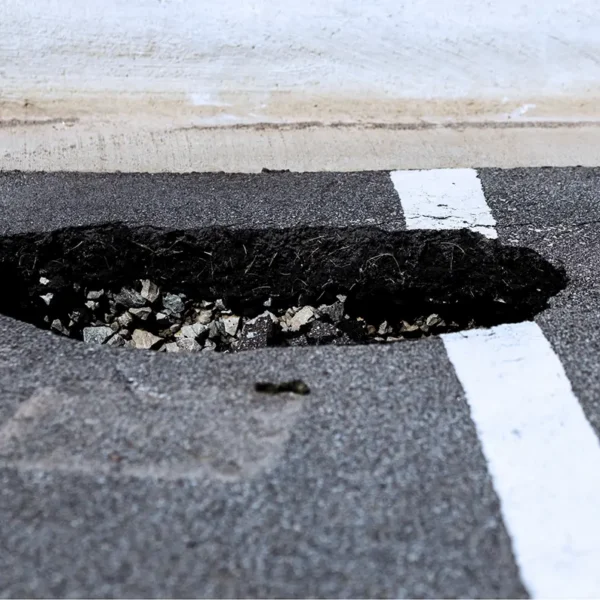
The expansion and contraction process slowly loosens the asphalt and weakens the underlying base. - Repeated cycles lead to spreading cracks, pothole formation, and structural breakdown.
Over time, these repeated movements cause surface failures and deeper structural damage.
Though the process may be gradual, the impact adds up quickly, especially during winters with frequent temperature swings.
Why Freeze-Thaw Damage Is So Problematic
Freeze-thaw damage doesn’t just affect how your pavement looks—it directly impacts performance, safety, and longevity. As cracks widen and potholes form, surfaces become uneven and hazardous, increasing the risk of slips, trips, vehicle damage, and liability concerns.
In addition, water infiltration weakens the pavement base, leading to accelerated deterioration. What begins as a small maintenance issue can quickly escalate into major repairs or even full pavement replacement if not addressed early.
Common Signs of Freeze-Thaw Damage
Property owners should watch for:
- Expanding or interconnected cracks
- New or worsening potholes
- Uneven surfaces or depressions
- Crumbling or surface breakdown
- Standing water after rainfall
These indicators often signal that freeze-thaw cycles are actively compromising the pavement’s integrity.
Stay Ahead of Winter Damage with Proactive Maintenance
At Asphalt Seal & Repair, we help property owners stay ahead of freeze-thaw damage with proactive maintenance solutions, including crack sealing, patching, and targeted repairs. Addressing small issues early helps block moisture intrusion, stabilize weakened areas, and protect your pavement through the harshest winter conditions.
Proactive maintenance not only reduces the risk of costly spring repairs but also extends pavement life, improves safety, and preserves your property’s appearance.
Protect Your Investment Before Damage Spreads
Understanding what’s happening beneath the surface is key to protecting your pavement. If your asphalt hasn’t been inspected recently—or if you’re noticing early signs of deterioration—now is the ideal time to act.
Contact Asphalt Seal & Repair today to schedule an asphalt inspection and proactive maintenance service. Our team provides crack sealing, patching, and repair solutions designed to help protect your pavement, extend its lifespan, and reduce long-term repair costs.