Commercial parking lot maintenance works best when you address problems early. Routine inspections and preventative work can extend pavement life and help delay more extensive repairs or reconstruction.
That’s especially important in Green Bay, where snow, freezing temperatures, plowing, and changing winter conditions put added stress on pavement. Asphalt Seal & Repair helps commercial property owners throughout Green Bay, De Pere, and Northeast Wisconsin identify pavement issues and plan maintenance based on their lot’s condition. In this parking lot maintenance guide, we outline practical tips to help you inspect and repair developing damage before water and traffic make it worse.
What Commercial Parking Lot Maintenance Actually Involves
Commercial parking lot maintenance includes scheduled and corrective work to keep pavement safe and functional. This includes inspections, crack treatment, sealcoating, pavement markings, drainage maintenance, localized repairs, and, when necessary, larger rehabilitation work.
The goal is to address pavement problems before they become more extensive. However, not every lot needs every service each year. Traffic, drainage, pavement condition, and existing damage should determine the maintenance schedule. When deterioration occurs, parking lot repair services can address localized or more significant pavement problems.
Preventative vs. Reactive Maintenance
- Preventative maintenance is performed before serious pavement failure develops. Examples include inspections, crack treatment, sealcoating, and restriping.
- Reactive maintenance addresses damage that has already occurred, such as potholes or failed pavement.
Who Is Responsible for Parking Lot Maintenance?
For owner-occupied commercial properties, the property owner generally oversees pavement upkeep and safety. For leased properties, responsibility may be divided among the owner, property manager, and tenant based on the lease.
Federal ADA standards also apply when accessible parking is required. These standards address parking-space dimensions, access aisles, signage, slopes, accessible routes, and other features. Property owners and operators should confirm current requirements when maintaining or restriping a lot and consult qualified legal counsel about lease or liability questions.
The Core Maintenance Tasks Every Business Owner Should Know
Effective parking lot maintenance services address minor issues before they escalate into major pavement failures. The right combination depends on pavement condition, traffic, drainage, and property use.
Crack Sealing and Crack Filling
Cracks create openings for water to enter the pavement. During Northeast Wisconsin winters, that moisture can freeze and expand, contributing to further deterioration.
Crack sealing is generally used for working cracks that move as pavement temperatures change. Crack filling is typically used for non-working cracks with less movement. A professional assessment can determine the appropriate treatment.
Spring is a good time to inspect for cracks that developed or worsened over winter. Asphalt Seal & Repair offers crack sealing to help protect damaged areas before moisture causes additional problems.
Sealcoating
Sealcoating helps protect asphalt from oxidation, weather exposure, and everyday wear. It is a protective treatment, not a repair for cracks or structural pavement failure.
You should generally sealcoat your parking lot every 2-3 years, although the best routine depends on traffic, pavement condition, product specifications, and previous maintenance. Schedule sealcoating in Green Bay when temperatures and weather conditions allow the material to cure properly. Address existing cracks and pavement failures first.
Pavement Markings and ADA Striping
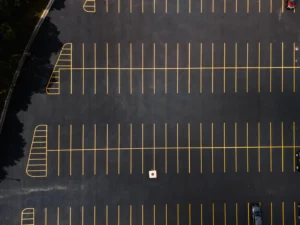
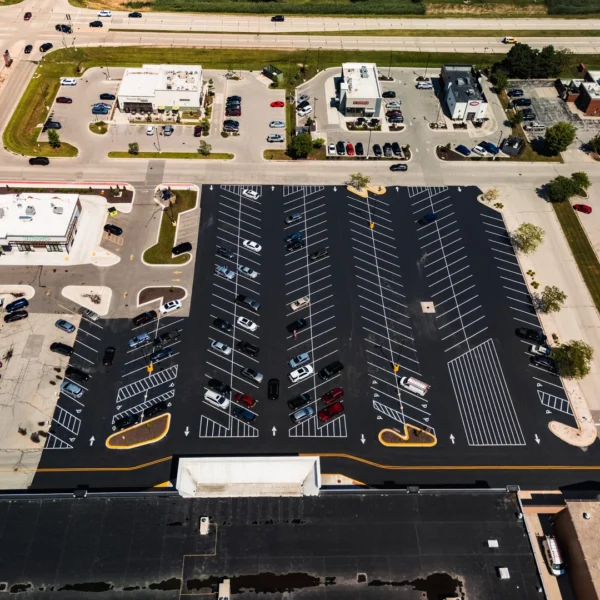
Faded parking lines can confuse traffic flow and make accessible spaces hard to identify. Parking lot striping services restore stall boundaries, traffic markings, fire lanes, and accessible parking markings.
ADA requirements go beyond paint. For example, a standard accessible parking space must be at least 96 inches wide with a 60-inch access aisle. Van-accessible parking can use a 132-inch space with a 60-inch aisle or a 96-inch space with a 96-inch aisle.
A Seasonal Maintenance Calendar for Green Bay Business Owners
Green Bay averages over 50 inches of snow each year, making seasonal planning an important part of commercial parking lot maintenance. Instead of following the same checklist year-round, adjust your priorities as conditions change.
Spring (March–May) — Assess and Repair
After winter, inspect your lot for cracks, potholes, uneven pavement, and drainage problems. Clear catch basins, schedule needed repairs, and check pavement markings for winter wear.
Summer (June–August) — Protect and Seal
Summer provides reliable conditions for many asphalt maintenance projects. Schedule appropriate sealcoating, repairs, and pavement marking during favorable weather.
Watch for alligator cracking, which can indicate deeper pavement failure that requires professional assessment rather than crack filling or sealcoating.
Fall (September–November) — Close Out and Prepare
Address existing damage before freezing temperatures return. Clear leaves and debris from drainage areas and complete necessary repairs while conditions allow.
Perform sealcoating only when temperatures, precipitation, and curing conditions meet product requirements.
Winter (December–February) — Monitor and Protect
Coordinate with snow-removal crews to avoid unnecessary pavement damage. Monitor the lot for new cracks, potholes, or heaving and document problem areas for spring repairs.
Not sure what your lot needs? A professional assessment can help prioritize repairs. Explore commercial paving services in Green Bay for local maintenance and repair options.
Common Mistakes Green Bay Business Owners Make with Parking Lot Maintenance
Even small maintenance mistakes can lead to larger repairs, safety concerns, and unnecessary costs. Green Bay business owners should avoid:
Waiting Until Damage Is Visible to Act
Don’t wait for customers to complain or a pothole to appear before inspecting your parking lot. Cracks, drainage problems, and other minor damage can worsen as water enters the pavement and temperatures change.
Schedule a walk-through every spring to catch problems early and plan repairs before they become more extensive.
Sealcoating Over Unrepaired Cracks
Sealcoat protects and rejuvenates asphalt, but it does not repair existing cracks or structural damage. Applying it over damaged pavement can leave openings where water continues to enter. Complete necessary crack sealing and repairs first so the sealcoat can protect the pavement surface properly.
Ignoring ADA Compliance During Re-Striping
Restriping involves more than repainting standard parking stalls. Accessible spaces, access aisles, signage, and other features must also meet current ADA requirements.
Overlooking Drainage Problems
Clogged catch basins, poor drainage, and low spots can contribute to pavement deterioration. Keep drainage areas clear and address recurring pooling before it leads to larger pavement problems.
FAQ
How often should a commercial parking lot be sealcoated?
There is no universal schedule. Timing depends on pavement condition, traffic, previous maintenance, the sealcoat product, and weather exposure. A contractor should inspect the pavement before recommending another application.
How much does commercial parking lot maintenance cost?
Costs depend on lot size, pavement condition, required services, traffic-control needs, and the extent of existing damage. A site assessment provides a more useful estimate than a generic per-square-foot price.
Who is liable if someone is injured in a commercial parking lot?
Responsibility depends on property ownership, control of the premises, lease terms, and the circumstances of the incident. Property owners and business operators should maintain safe premises and consult a Wisconsin attorney for advice about a specific injury, lease, or liability question.
How do I know if my parking lot needs resurfacing or repair?
Localized cracks and pavement failures may be candidates for targeted repair. Widespread structural deterioration, drainage problems, or alligator cracking can indicate that more extensive rehabilitation or reconstruction is necessary. A pavement assessment is the best way to determine the appropriate treatment.
When is the best time to maintain a parking lot in Green Bay?
Many asphalt maintenance projects are best scheduled during warmer months when temperature and weather conditions meet material requirements. Spring helps identify winter damage, while summer generally provides more reliable conditions for repairs, sealcoating, and pavement markings.
Plan Your Commercial Parking Lot Maintenance
Asphalt Seal & Repair helps Green Bay-area businesses evaluate commercial pavement and prioritize practical maintenance and repair needs. If cracks, potholes, drainage issues, faded markings, or other pavement problems are starting to appear, schedule an assessment before they worsen.